BLOG

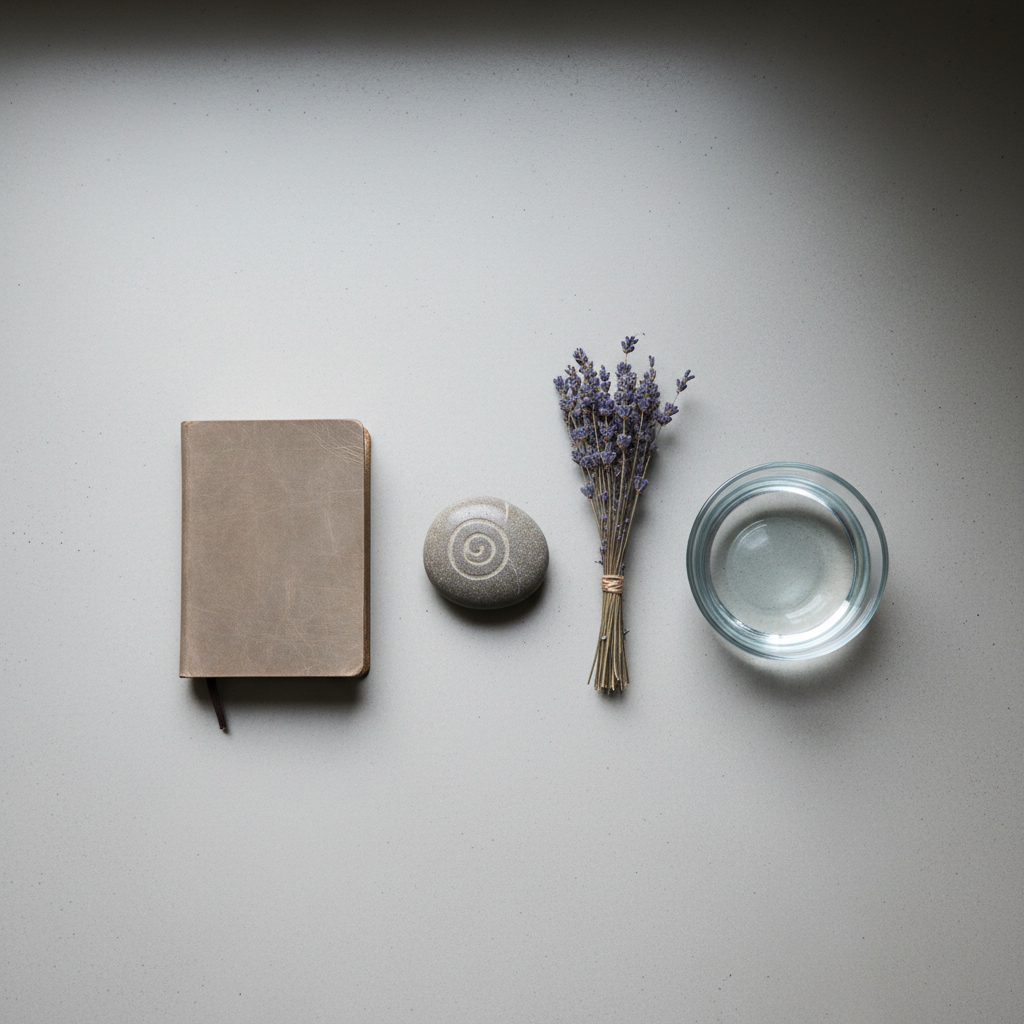
A carefully arranged still life of symbolic objects for healing sits on a pale concrete surface: a smooth river stone engraved with a subtle spiral, a closed leather-bound journal in warm grey, a small bundle of dried lavender, and a glass bowl filled with clear water reflecting soft light. The items are spaced with intentional negative space, forming a gentle arc. Overcast daylight from a nearby unseen window creates even, diffused illumination with delicate reflections in the water and subdued shadows. Captured from directly above in a bird’s-eye view, the composition feels ordered yet organic. The mood is serene and grounding, suggesting trauma-informed care and ritual without being overtly spiritual, rendered in photographic realism with a muted, sophisticated palette and refined details.

Warrior Stories

Toni Peters shares trauma-informed guidance, women’s stories, memoir insights, and practical tools for healing. An opportunity to grow empowerment and generational resilience.

Latest Posts

A beginning, even here.

Every story has a first spark, and this post is mine — the moment I open the door and invite you into the work, the healing, and the rising that shape everything I write.

This blog will become a home for reflections, teachings, and the quiet truths that don’t always make it into the book.

Thank you for stepping into this space with me.

— Toni
Most women don’t realize they’re living in survival mode until something inside them begins to ache, crack, or whisper, “This isn’t sustainable.” Survival mode is quiet. It’s subtle. It becomes familiar enough that you stop questioning why everything feels so heavy.
Survival mode isn’t a personality trait — it’s a nervous system response.
It’s your body doing everything it can to keep you alive, even long after the danger has passed.
Here are some of the most common signs you may be living in survival mode, especially if you’ve carried trauma, chronic stress, or years of emotional labor on your shoulders.

1. You’re always bracing for something to go wrong
Even on calm days, your body feels tense — like you’re waiting for the next hit, the next crisis, the next disappointment. You can’t fully exhale because your system doesn’t believe it’s safe to.
2. Rest feels impossible
You’re exhausted, but you can’t slow down. Stillness feels unsafe. Your mind races. Your body stays alert. You collapse into bed tired but wired.
3. You’re constantly overwhelmed
Small tasks feel huge. Decisions feel impossible. Your bandwidth is gone, and everything feels like “too much,” even things you used to handle with ease.
4. You disconnect from your own needs
You forget to eat. You forget to drink water. You forget what you want. You move through the day on autopilot, doing what needs to be done without checking in with yourself.
5. You’re hyper‑independent or hyper‑responsible
You carry everything alone. You don’t ask for help. You feel guilty resting. You feel responsible for everyone else’s emotions, reactions, and comfort.
6. You feel numb more often than you feel present
You’re not falling apart — but you’re not fully living either. You’re just… getting through.
7. You shape‑shift to stay safe
You people‑please. You over‑explain. You apologize for things that aren’t yours. You shrink yourself to avoid conflict or disappointment.

Why this matters
Survival mode is not a failure.
It’s not a flaw.
It’s not a lack of strength.
It’s evidence of how hard you’ve worked to stay alive, stay functional, stay upright in a world that has asked too much of you.
But you weren’t meant to live your whole life bracing for impact.
Recognizing survival mode is the first step toward shifting out of it — gently, slowly, compassionately. Awareness creates space. Space creates choice. And choice is where healing begins.

A gentle invitation
If you saw yourself in any of these signs, you’re not alone.
You’re not broken.
You’re not behind.
You’re simply carrying more than your nervous system was ever meant to hold on its own.
In the posts to come, I’ll share ways to soften survival mode, reconnect with your body, and begin the slow return to yourself — not by force, but by honoring your story.
Your rise begins with recognition.
Toni