Lately I’ve been having a very specific midlife crisis: realizing my career might not wrap
up with the triumphant crescendo I always imagined.
No farewell luncheon. No sheet
cake. No “We couldn’t have done it without you.”
Instead, the economy wobbled, AI strutted in like it owned the place — not to fire
anyone, not yet, but to quietly rearrange the furniture and make you wonder how long
your chair stays in the room. And suddenly my job feels less like a legacy and more like
a sitcom that got canceled mid-season — storylines unresolved, character arcs
abandoned, the writers’ room already moving on to the next thing.
It’s disheartening. And if I’m being honest, it feels like my power is being quietly
siphoned off while I’m still sitting at my desk.
I grew up believing careers had arcs — beginnings, middles, triumphant endings. Our
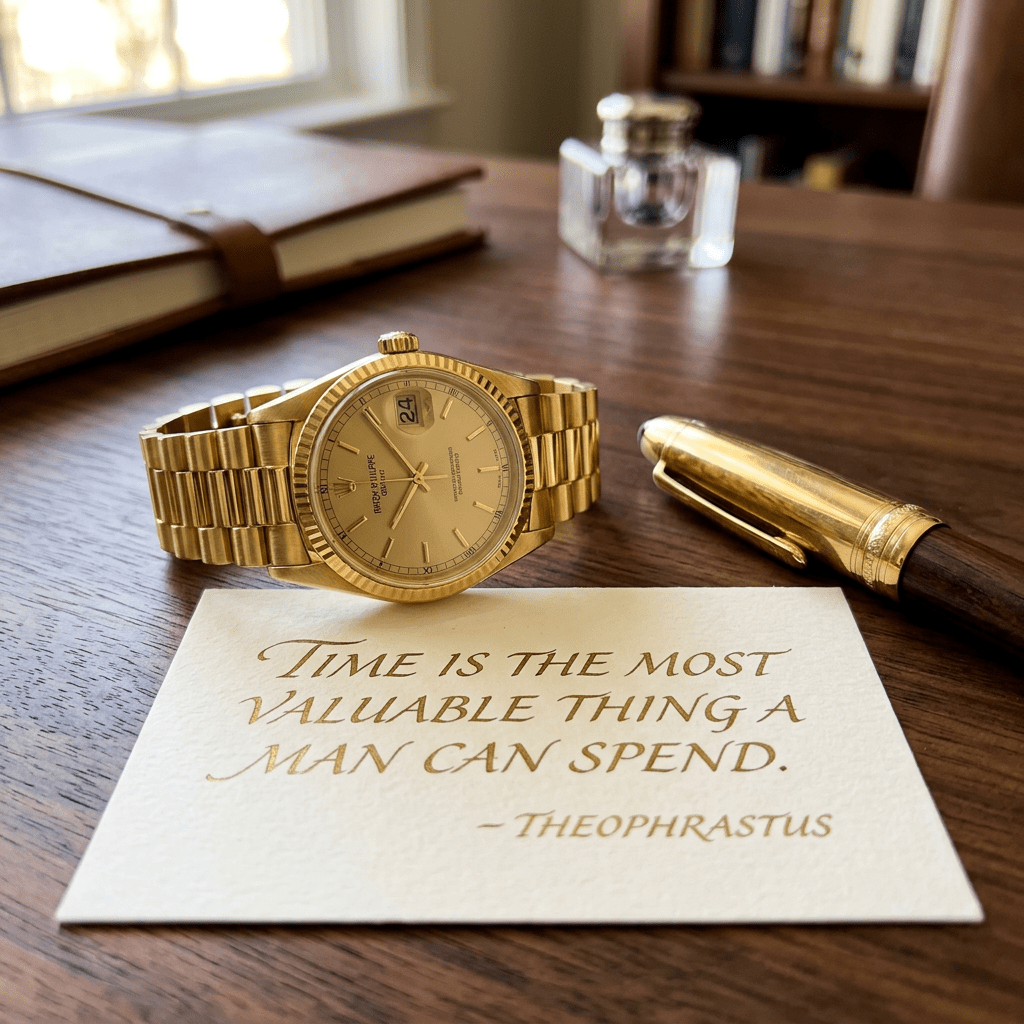
grandparents worked thirty-five years in the same place, collected their gold watches,
and had retirement parties with punch bowls and potato salad. Their “high note” was
built into the system. It was a covenant. You gave loyalty; the institution gave meaning
back.
That covenant is gone. Most of us know this intellectually. But knowing it and feeling it
— feeling it in the specific, quiet way it arrives when you realize you might be on your
last corporate chapter, and the chapter might not close the way you always assumed it
would — that’s different. That’s a grief that doesn’t have a name yet.
It’s not dramatic. It’s not catastrophic. It’s just… tender. A sensitive spot you forget about
until something brushes against it: a reorg announcement, a younger colleague casually
mentioning a tool you’ve never heard of, a meeting you realize you weren’t invited to.
Small things. They accumulate.
I want to be specific about what the fear actually is, because I don’t think it’s really about
the party, or the watch, or even the applause.
It’s about the question underneath all of it:
Did it matter?
Thirty years of showing up. Of solving problems in rooms where you were often the only
one who looked like you. Of building things — teams, processes, relationships, muscle
memory — and then watching those things get restructured, rebranded, or replaced by
a software license. The fear isn’t just what happens next. The fear is: what if none of it
counted?
That’s the real bruise.
And here’s what makes it stranger: AI isn’t my enemy. Not yet, maybe not ever — I’m
still genuinely figuring out where it fits. But it has a particular way of casting a shadow
over human effort, making work that once felt considered and skilled feel like the
expensive, slow version of something that now takes eleven seconds. It doesn’t have to
replace you to unsettle you. The possibility is enough. The question it plants — for how
much longer? — is enough.
I know the work mattered. But some days the knowing doesn’t reach the feeling.
And then — I didn’t expect this part — something shifted.
Not dramatically. Not with a lightning bolt of clarity or a TED Talk epiphany. Just a quiet,
subversive little thought that crept in one morning while I was writing something for
myself, not for work, not for performance, just because I wanted to:
Maybe you don’t want that ending anyway.
I sat with that for a while. Turned it over.
Because here’s the thing about the gold watch ending — it was never really about me. It
was about the institution’s need to close a loop, to acknowledge its own investment, to
say you were useful here. The celebration was always, at least partly, for them. A ritual
of release. A mutual fiction: we pretend it was partnership; you pretend the leaving
doesn’t sting.
What if I write my own ending instead?
Not the version where I wait for someone else to decide what my contribution meant.
Not the version where my worth gets calculated in tenure and title and the warmth of the room at the going-away party.
The version where I’m the one holding the pen.
I am a writer. I’ve known this for a long time, but I’ve treated it like a hobby, a side door,
a thing I do when the real work is done. It has taken me until now — until the discomfort
got loud enough — to consider that maybe the writing is the real work. Maybe it always
was.
AI will keep advancing — maybe as a tool I learn to use, maybe as a force that
reshapes everything around me. The economy will keep doing what economies do.
Corporate structures will keep optimizing themselves into whatever frictionless form
they’re becoming.
None of that can take away the thing I know how to do: make meaning out of mess.
Find the shape in the chaos. Take a lived experience — the specific, textured,
embarrassing, tender truth of it — and turn it into something another person reads and
thinks, yes, that. That’s it exactly.
That’s not a soft skill. That’s not a redundancy. That’s the whole point.
My grandparents had their version of a high note. Thirty-five years, a pension, a party
with punch bowls. It was real, and it meant something, and I’m not going to be precious
about the fact that I won’t get that version.
But I’ll tell you what I’m building instead.
A body of work that belongs to me. A voice that gets clearer the more I use it. An ending
— or maybe a beginning, the two look surprisingly similar from here — that I designed,
not one I was handed.
They can keep the gold watch.
I’ll take the pen.
And I’m already writing.

 Toni Peters - Author
Leave a comment