Toni Peters. November 4, 2026.
In the late 1990s, I was an independent contractor with a global skin care and cosmetics company. It was sales, which meant my days came down to asking women yes-or-no questions.
Would you like to get together for a facial?
Would you like to try the products I use and love?
Would you like to hear about a company that offers flexibility, independence, and room to grow?
With my family and friends, I could ask. They already loved me, so a no from them didn’t cost much. But the minute I stepped outside that circle, I froze. I’d see a sharp, put-together woman and know exactly what I wanted to say, and nothing came out. My self-esteem was a lot lower back then, and one simple question to a stranger felt like more than I could risk.
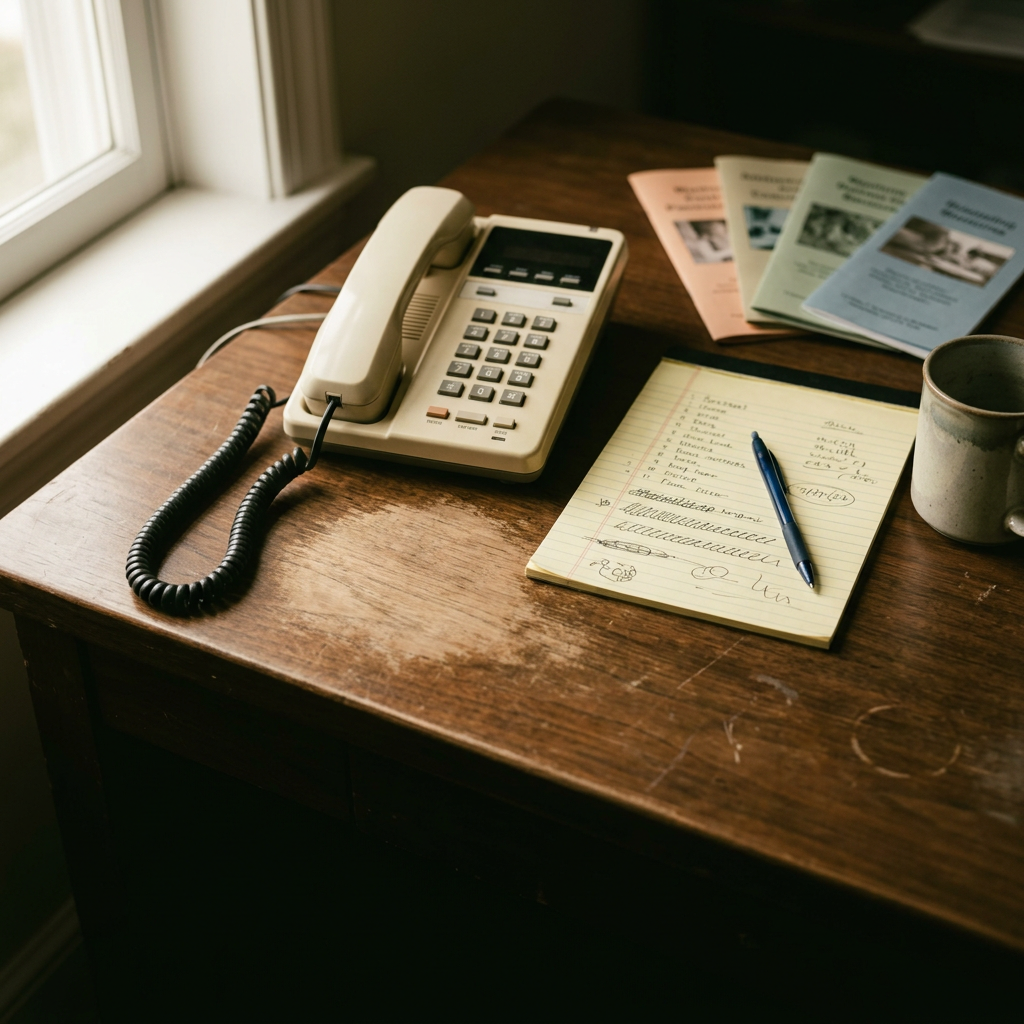
One day stands out. I was sitting at my desk with the phone right there and a list of five women and their phone numbers in front of me. I couldn’t even pick up the phone. My body froze. It literally wouldn’t move. I was frustrated, but worse than that, I was disappointed in myself. And that made everything harder, because I kept beating myself up over it day after day.
My business didn’t fail all at once. It fizzled out, one unasked question at a time.

What a no actually is
Recently I listened to a sermon Dr. Charles Stanley preached in the early 1980s, and it took me right back to those years. It made me ask what I was so afraid of.
At its simplest, rejection is someone saying no. We ask a question, and they answer it. So why does a two-letter word carry so much weight? And why does just the thought of hearing it keep so many of us from asking at all?
Dr. Stanley said that when someone tells us no, we hear three messages underneath it: we don’t belong, we aren’t worthy, and we aren’t competent.
I recognized every one. Those were the voices in my head every time I almost asked a stranger to try a product. And none of them are true.
“You don’t belong”
A no can feel like a door closing with you on the outside. Usually it means this group, this job, or this person isn’t the right fit right now. That’s a much smaller thing than being shut out of everything.
Here’s what I know now. I belong to God, no matter what. I have brothers and sisters in Christ. I’m part of the Church. Ephesians 2:19 says we are “no more strangers and foreigners, but fellow citizens with the saints, and of the household of God.” I do belong, and no one’s no can move me out of that house.
“You aren’t worthy”
This one cuts deepest, because it goes after who you are instead of what you asked. A woman who turned down a facial was telling me about her schedule, her budget, or her skin. She had no way to measure my value, because she isn’t the one who set it.
Psalm 139:14 says we are “fearfully and wonderfully made.” Ephesians 1:6 says we are “accepted in the beloved.” My worth was decided long before I ever asked anyone to try a moisturizer. I am worthy, and I know now that I’m worthy of the life I’ve designed for myself. So are you.
“You aren’t competent”
Sometimes a no really is about skill. Maybe the pitch was clumsy or the timing was off. Even then, it’s about one conversation on one day. Skills grow with practice, and mine never had the chance, because I stopped practicing the moment it got hard.
Fear blurs “not ready yet” into “never good enough.” Scripture keeps them apart. Second Corinthians 3:5 says “our sufficiency is of God.” Today I know what to do and how to do it. If there’s something I don’t know, I can learn it. Incompetence should only ever be a temporary situation.
What I was really afraid of
Looking back, what scared me was what I thought a no would prove. If a stranger turned me down, it would confirm everything I already suspected about myself. So I decided for her. I said no on her behalf before she ever had the chance, and I called it being careful.
Every question I didn’t ask got the same answer I was afraid of. I just gave it to myself.
Then I punished myself for it. Every day I didn’t call became more proof that I wasn’t good enough, and that made the next day’s call even harder to make. The shame of not asking hurt me more than any woman on that list ever could have.

Asking again
Almost thirty years later, I’m asking again. I’m building a business that helps families turn their stories into books, and that means asking people I don’t know whether they’d like to talk.
These days, asking isn’t a big deal. I know there are families out there just like mine, families who love to share their stories. They love reunions and family gatherings, passing around photos and rehashing old times. Those are my people. If one of them tells me no, maybe they don’t have the money right now, or maybe the family historian is too ill to share stories. Whatever the reason, it has nothing to do with my sense of belonging, my self-worth, or my competence.
So go ahead, tell me no. I know who I am now, and a no can’t change that.
Is there a question you’ve been afraid to ask? A friend you’d like to reconnect with, a job you want to apply for, a dream you’ve kept to yourself? Ask it this week. Then come back and tell me how it went.

About the author
I write about women who survive things and become someone new on the other side. I’m a citizen of the Citizen Potawatomi Nation, a grandmother who answers to Mimi, and the founder of Warrior Storytellers. I live in Edmond, Oklahoma, where I write before the sun is all the way up and spend most of what’s left of my free time on the water.
Something’s coming.
Leave a Reply