
Author: chapmanmediaco5f97044179

  • How to Outsmart Your Own Brain (Harder Than the Algorithm)

    How to Outsmart Your Own Brain (Harder Than the Algorithm)

    Raccoon standing on a cluttered wooden desk in an attic room with books and various items
    A raccoon curiously investigates books and objects on a cluttered attic desk.

    How to Outsmart Your Own Brain (Harder Than the Algorithm)

    or The Raccoon in Your Attic

    Let’s get one thing straight:
    Beating the algorithm is child’s play compared to outsmarting your own brain.

    Algorithms are predictable.
    They like consistency, chaos, and the occasional trending audio.
    Your brain, however?

    Your brain is a raccoon. Think about a clever, nocturnal, emotionally dramatic raccoon who lives in your attic and rearranges your furniture at 3 a.m.

    And yet — this is the creature we’re supposed to rely on for creativity, courage, and getting our lives together.

    So today, let’s talk about how to outsmart your own brain.
    Or at least how to gently trick it into cooperating long enough to write a paragraph, send an email, or stop spiraling about something that happened in 1997.

    Step 1: Accept That Your Brain Is Not Always on Your Side

    Your brain has two primary goals:

    • keep you alive
    • keep you from doing anything remotely uncomfortable

    This is why your brain will happily let you reorganize your sock drawer for three hours but will stage a full-scale rebellion when you try to write a chapter of your memoir.

    Your brain is not trying to sabotage you.
    It just thinks “emotional vulnerability” is the same as “being chased by a bear.”

    Step 2: Give Your Brain a Job It Thinks It Invented

    Your brain loves to feel important.
    So instead of saying, “I’m going to write for an hour,” try:

    “I’m just going to open the document so you can look at it.”

    Your brain:
    “Oh, well, that’s harmless. I’ll allow it.”

    Five minutes later, you’re writing.
    Your brain is confused, but it’s too late.

    You’ve tricked the raccoon.

    Step 3: Use Bribery (Your Brain Responds Well to Snacks)

    You know who else responds well to snacks?
    Toddlers.
    Algorithms.
    Golden retrievers.

    Your brain is no different. Tell it: “If we write for 20 minutes, we get a treat.”

    Your brain doesn’t need to know the treat is just iced coffee or a walk outside.
    It just needs the promise of joy. Brains are simple like that.

    Step 4: Stop Expecting Your Brain to Be Logical

    Your brain will:

    • remember a mistake from 12 years ago
    • forget why it walked into a room
    • panic over sending an email
    • remain completely unfazed by global chaos

    It’s not logical. It’s emotional. It’s a teenage drama queen. It’s doing its best.

    Trying to reason with your brain is like trying to negotiate with a squirrel holding a stolen granola bar.

    Just… don’t.

    Step 5: Outsmart Fear by Making It Bored

    In my experience, fear thrives on attention. It loves drama. It loves a spotlight. The trick? The trick is to make fear so bored it wanders off to bother someone else.

    How?

    Do the thing anyway.
    Do it quietly.
    Do it without ceremony.
    Do it while fear is still mid-monologue.

    Fear hates that.

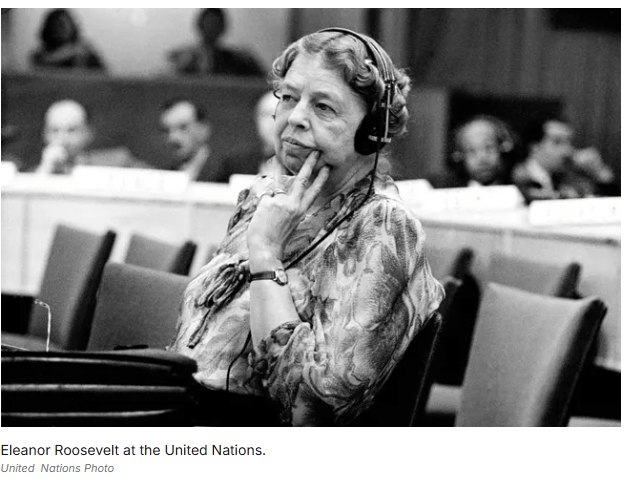
    Eleanor Roosevelt knew this.  She didn’t wait to feel brave. She acted, and bravery followed.

    Your brain will eventually catch up.

    Step 6: Celebrate Every Tiny Victory (Your Brain Loves Praise)

    Your brain lights up like a Christmas tree when you acknowledge progress.

    Wrote one sentence?
    Victory.

    Opened the laptop?
    Victory.

    Didn’t spiral into existential dread before coffee?
    Major victory.

    Your brain is trying.
    Reward it.

    The Real Secret to Outsmarting Your Brain

    Here it is — the truth about outsmarting your brain:

    You don’t outsmart your brain by overpowering it.
    You outsmart your brain by partnering with it.

    By understanding its fears and honoring its limits. By gently nudging it toward the life you want. By choosing courage even when your brain is screaming, “Absolutely not, we are not doing that.”

    Your brain is not the enemy.
    It’s the narrator.
    The protector.
    The raccoon in the attic doing its best with the tools it has.

    And with a little humor, a little compassion, and a few strategic snacks, you can lead it — step by trembling step — into the life you’re meant to live.
  • Reclaiming the Future: Why I’m Writing a Memoir About Abuse, Hypervigilance, and Healing.

    Reclaiming the Future: Why I’m Writing a Memoir About Abuse, Hypervigilance, and Healing.

    The Mask of the “Perfect” Survivor

    When people think of trauma, they often think of visible chaos. They don’t often think of the straight-A student, the hyper-reliable employee, the CEO, or the chronic people-pleaser. But for me, perfectionism and people-pleasing weren’t just personality traits; they were survival mechanisms born out of childhood physical and sexual abuse, and utter abandonment.

    If I was perfect, I was safe. If I made everyone else happy, I wouldn’t be left behind again.

    But as I sit down to write my memoir, I am reckoning with the massive, hidden cost of that response. Living in a constant state of hypervigilance takes a heavy toll on the mind and body. Even now, years later, I still battle the echoes of that hypervigilance in my day-to-day life. It is a war I am mostly winning, but it requires active, daily strategy.  There are moments when I must stop everything that I’m doing, take a few seconds to do a quick “check-in” on the way my body is feeling, and respond in a way that releases the tension. My body gets so tense and so on edge sometimes that I now experience chronic pain diagnosed as an “unspecified autoimmune disorder”. At lunch with a couple of girlfriends last week, I choked on a sip of water. My friend, Mary, started pounding me on the back, trying to help me get my breath back. Pain wracked my body every time she touched me. She didn’t know, and I didn’t tell her. But it was a moment that reminded me of a strange irony: I have to be intensely vigilant about managing my own hypervigilance (sounds crazy, eh?).

    Why I am Reliving This on the Page

    Writing a memoir is not just about recounting the past; it is about excavating it. It is incredibly difficult to put these lived experiences into words. So, why do it? [2, 3, 4, 5] 

    The purpose behind my book is simple: To show you that your past does not get the final say in who you become.

    Trauma tries to convince us that our ceiling has been lowered—that certain dreams are no longer available to us because we are “broken.” I am writing this book to shatter that lie.

    The Healing Framework

    In the book, I’m sharing not just my story, but the actual framework I used to heal and navigate a world that my body constantly told me was unsafe. I want to encourage others to realize that they can still become exactly who they were meant to be.

    • The Writer is still in there.
    • The Teacher is still in there.
    • The CEO and Entrepreneur are still entirely possible.

    Those opportunities still exist. They are still real. Your trauma might have delayed the timeline, but it cannot cancel the destination.

    It is Not Too Late

    If you are reading this and you feel exhausted from holding up the weight of perfectionism, or if your body is tired from being on constant high alert—I see you.

    I am writing this book for us. To remind us that it is not too late to put down the heavy armor of our survival mechanisms and step into our true calling. If you’re interested in my progress or updates, feel free to subscribe!I’d love to hear from you in the comments: What is a dream or a role (Writer, Leader, Creator) that you felt was lost to your past, but you are ready to reclaim?

  • More on Eleanor Roosevelt……

    More on Eleanor Roosevelt……

    What do we really know about Eleanor Roosevelt?

    Most people know the headlines: She was the wife of a President. She was outspoken. She was a published author. She was a global advocate for human rights.

    But beneath the public figure was a woman shaped by a childhood that taught her fear long before she ever learned courage.

    She grew up in a painful, unstable home. She lost both parents early. She was raised in an environment of criticism and emotional neglect. She learned to shrink, to stay quiet, to disappear into the background. Sound familiar?

    She was shy. She was introverted. She was fearful. Again….familiar to many.

    And that is exactly why her words about fear still land with such force. Because she wasn’t speaking from theory. She was speaking from experience.

    Fear: The Emotion We All Understand

    Being afraid is something every one of us understands. Fear is universal. Fear is human. Fear is the quiet companion that walks beside us in moments of uncertainty, transition, and truth-telling.

    Eleanor Roosevelt understood this deeply. She lived with fear — not as an occasional visitor, but as a constant presence.

    And yet… she became one of the most courageous women of the 20th century.

    So how did she make that shift? And more importantly — can we?

    How Eleanor Roosevelt Moved From Fearful to Courageous

    Eleanor Roosevelt didn’t wake up one day fearless. She didn’t wait for confidence to arrive. She didn’t wait for fear to disappear.

    She made a choice.

    A choice she made again and again, in small moments and large ones.

    1. She chose visibility over hiding

    Despite being naturally shy, she held press conferences, gave speeches, wrote a daily column, and traveled the world. Every act of visibility was an act of defiance – not against people or ideals – but against her own fear.

    2. She chose purpose over comfort

    She stepped into arenas where she knew she would be criticized — civil rights, women’s rights, human rights. Of course, she felt fear. She did it anyway.

    3. She chose action over paralysis

    Her most famous line — “You must do the thing you think you cannot do” — wasn’t a slogan. It was her personal mantra. And we can borrow it!

    4. She chose growth over safety

    She believed courage was built through repeated exposure to fear. Every time she faced it, she expanded her capacity, her ability and her influence.

    5. She chose meaning over approval

    She stopped living for other people’s expectations and started living for her own values.

    This is the shift. Not from fear to fearlessness. But from fear to forward movement.

    What Her Life Teaches Us About Our Own

    Eleanor Roosevelt’s story isn’t about perfection. It’s about possibility.

    She teaches us that courage is not the absence of fear — it’s the decision to take action anyway.

    She teaches us that fear is not a flaw — it’s a signal. A threshold. A doorway.

    She teaches us that the life we want is often waiting on the other side of the thing we’re most afraid to do.

    And she teaches us that we don’t have to be fearless to be brave. We just have to be willing.

    So What About Us?

    We’re all afraid of something. Afraid of failing. Afraid of succeeding. Afraid of being seen. Afraid of being misunderstood. Afraid of telling the truth about our lives. Afraid of stepping into the next version of ourselves.

    But Eleanor Roosevelt’s life offers us a map:

    • Start where you are.
    • Feel the fear.
    • Take the step anyway.
    • Let courage grow from the doing.

    Courage is not a trait. It’s simply a daily practice. Remember…Do one thing every day that scares you. You’ve got this!

  • Eleanor Roosevelt and the Algorithm (aka How to Beat an Algorithm)

    Eleanor Roosevelt and the Algorithm (aka How to Beat an Algorithm)

    Let’s be honest: Algorithms are the modern-day equivalent of that one moody cat who lives in your neighborhood. You put out food. You speak gently. You offer your best energy. And the cat still looks at you like, “I’ll think about it.”

    That’s the algorithm. A digital feline with commitment issues.

    And yet — here we are. Writers. Creators. Memoirists. Trying to get a rectangle of code to notice us.

    So today, let’s talk about how to beat an algorithm. Or at least how to confuse it so thoroughly that it gives up and shows your content to people out of sheer exhaustion.

    Step 1: Accept That the Algorithm Is Basically a Toddler

    It wants:

    • repetition
    • bright colors
    • snacks
    • and for you to clap every time it does something basic

    If you post consistently, it’s thrilled. If you disappear for a week, it throws itself on the floor and screams.

    Treat it like a toddler. Lower your expectations. Offer praise sparingly.

    Step 2: Post Like You’re Eleanor Roosevelt With Wi-Fi

    Eleanor Roosevelt was shy, introverted, and terrified of public speaking — and yet she still managed to become one of the most influential voices of her time.

    Imagine her on Instagram:

    “You must do the thing you think you cannot do.”posts reel of herself hitting ‘publish’ on a caption she overthought for 48 hours

    “Do one thing every day that scares you.”goes live accidentally, panics, ends live immediately

    If Eleanor could face global politics, you can face the algorithm. Probably.

    Step 3: Remember the Algorithm Loves Chaos

    You spend three hours crafting a thoughtful, emotionally resonant post? The algorithm: “Cute. Here’s 12 views.”

    You post a blurry photo of your coffee with the caption “Mondays…”? The algorithm: “A masterpiece. Show it to everyone.”

    Lean into the chaos. Post the polished thing. Post the messy thing. Post the thing you wrote at 2 a.m. Post the thing you wrote in the Target parking lot.

    The algorithm respects unpredictability. It’s like dating someone who only texts back when Mercury is in retrograde.

    Step 4: Use Audio the Algorithm Likes

    You know what the algorithm loves? Trendy audio clips.

    You know what you love? Not dancing.

    Good news: You don’t have to dance. You can point at words. You can stare into the camera like you’re on The Office. You can walk slowly toward the camera like you’re in a documentary about your own life.

    The algorithm eats that up.

    Step 5: Pretend You’re Not Trying

    The algorithm can smell desperation. It’s like a bloodhound for insecurity.

    Post like you’re Eleanor Roosevelt writing a casual note to a friend:

    “Oh this? Just a little reel I made while contemplating the nature of courage and also trying to remember my Instagram password.”

    The less you care, the more it cares. It’s toxic, but it works.

    Step 6: Understand That Beating the Algorithm Isn’t the Point

    Here’s the truth: You don’t beat the algorithm. You outlast it.

    You show up. You tell the truth. You share your story. You connect with real humans who are also trying to figure out why their last post only got 17 likes.

    You keep going — not because the algorithm rewards you, but because your voice deserves to be heard.

    Eleanor Roosevelt didn’t become Eleanor Roosevelt because she mastered a system. She became Eleanor Roosevelt because she refused to let fear decide her fate.

    And honestly? That’s the real algorithm hack.

  • Corporate Gold Watch… or Plot Twist?

    Corporate Gold Watch… or Plot Twist?

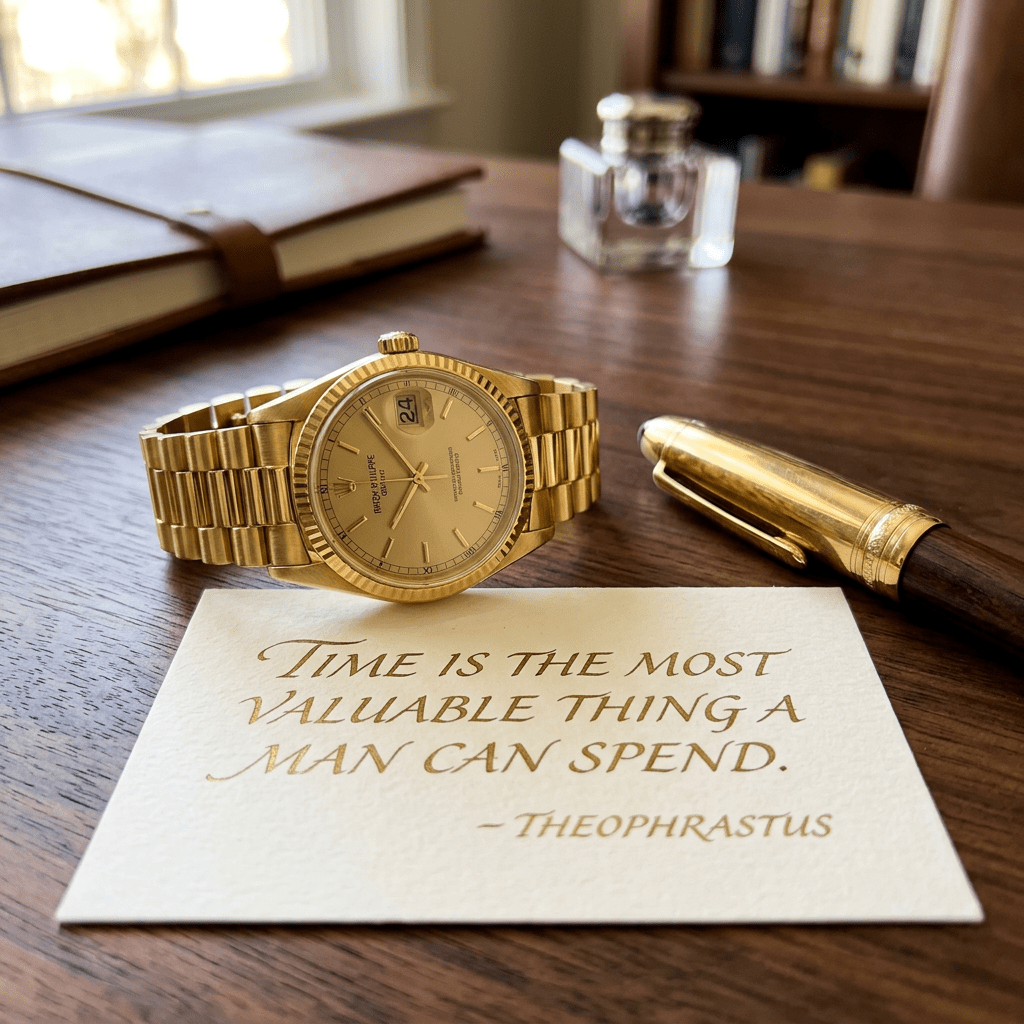
    Lately I’ve been having a very specific midlife crisis: realizing my career might not wrap
    up with the triumphant crescendo I always imagined.

    No farewell luncheon. No sheet
    cake. No “We couldn’t have done it without you.”


    Instead, the economy wobbled, AI strutted in like it owned the place — not to fire
    anyone, not yet, but to quietly rearrange the furniture and make you wonder how long
    your chair stays in the room. And suddenly my job feels less like a legacy and more like
    a sitcom that got canceled mid-season — storylines unresolved, character arcs
    abandoned, the writers’ room already moving on to the next thing.


    It’s disheartening. And if I’m being honest, it feels like my power is being quietly
    siphoned off while I’m still sitting at my desk.


    I grew up believing careers had arcs — beginnings, middles, triumphant endings. Our
    grandparents worked thirty-five years in the same place, collected their gold watches,
    and had retirement parties with punch bowls and potato salad. Their “high note” was
    built into the system. It was a covenant. You gave loyalty; the institution gave meaning
    back.


    That covenant is gone. Most of us know this intellectually. But knowing it and feeling it
    — feeling it in the specific, quiet way it arrives when you realize you might be on your
    last corporate chapter, and the chapter might not close the way you always assumed it
    would — that’s different. That’s a grief that doesn’t have a name yet.


    It’s not dramatic. It’s not catastrophic. It’s just… tender. A sensitive spot you forget about
    until something brushes against it: a reorg announcement, a younger colleague casually
    mentioning a tool you’ve never heard of, a meeting you realize you weren’t invited to.
    Small things. They accumulate.


    I want to be specific about what the fear actually is, because I don’t think it’s really about
    the party, or the watch, or even the applause.


    It’s about the question underneath all of it:

    Did it matter?


    Thirty years of showing up. Of solving problems in rooms where you were often the only
    one who looked like you. Of building things — teams, processes, relationships, muscle
    memory — and then watching those things get restructured, rebranded, or replaced by
    a software license. The fear isn’t just what happens next. The fear is: what if none of it
    counted?


    That’s the real bruise.


    And here’s what makes it stranger: AI isn’t my enemy. Not yet, maybe not ever — I’m
    still genuinely figuring out where it fits. But it has a particular way of casting a shadow

    over human effort, making work that once felt considered and skilled feel like the
    expensive, slow version of something that now takes eleven seconds. It doesn’t have to
    replace you to unsettle you. The possibility is enough. The question it plants — for how
    much longer? — is enough.


    I know the work mattered. But some days the knowing doesn’t reach the feeling.
    And then — I didn’t expect this part — something shifted.


    Not dramatically. Not with a lightning bolt of clarity or a TED Talk epiphany. Just a quiet,
    subversive little thought that crept in one morning while I was writing something for
    myself, not for work, not for performance, just because I wanted to:
    Maybe you don’t want that ending anyway.


    I sat with that for a while. Turned it over.


    Because here’s the thing about the gold watch ending — it was never really about me. It
    was about the institution’s need to close a loop, to acknowledge its own investment, to
    say you were useful here. The celebration was always, at least partly, for them. A ritual
    of release. A mutual fiction: we pretend it was partnership; you pretend the leaving
    doesn’t sting.


    What if I write my own ending instead?


    Not the version where I wait for someone else to decide what my contribution meant.
    Not the version where my worth gets calculated in tenure and title and the warmth of the room at the going-away party.

    The version where I’m the one holding the pen.
    I am a writer. I’ve known this for a long time, but I’ve treated it like a hobby, a side door,
    a thing I do when the real work is done. It has taken me until now — until the discomfort
    got loud enough — to consider that maybe the writing is the real work. Maybe it always
    was.


    AI will keep advancing — maybe as a tool I learn to use, maybe as a force that
    reshapes everything around me. The economy will keep doing what economies do.
    Corporate structures will keep optimizing themselves into whatever frictionless form
    they’re becoming.


    None of that can take away the thing I know how to do: make meaning out of mess.
    Find the shape in the chaos. Take a lived experience — the specific, textured,
    embarrassing, tender truth of it — and turn it into something another person reads and
    thinks, yes, that. That’s it exactly.
    That’s not a soft skill. That’s not a redundancy. That’s the whole point.

    My grandparents had their version of a high note. Thirty-five years, a pension, a party
    with punch bowls. It was real, and it meant something, and I’m not going to be precious
    about the fact that I won’t get that version.


    But I’ll tell you what I’m building instead.


    A body of work that belongs to me. A voice that gets clearer the more I use it. An ending
    — or maybe a beginning, the two look surprisingly similar from here — that I designed,
    not one I was handed.


    They can keep the gold watch.
    I’ll take the pen.


    And I’m already writing.

  • The Fear That Connects Us
If you shared your story with me – this post is for you.

    The Fear That Connects Us If you shared your story with me – this post is for you.

    Writing about your life requires a specific kind of courage — the kind that doesn’t roar, but trembles. The kind that doesn’t arrive fully formed, but grows in the cracks left behind by fear. The kind that asks you to tell the truth even when your voice shakes.

    I’ve learned this from the women who have opened their lives to me.

    Women from every walk of life — wealthy, poor, middle-class. Women of different ages, different ethnicities, different histories. Their traumas vary: betrayal, abuse, abandonment, the slow erosion of identity, the sudden collapse of safety, the quiet violence of being unseen.

    Their stories are different. But their fear is the same.

    Fear is the thread that runs through every story I’ve been trusted with. Fear of leaving. Fear of staying. Fear of being believed. Fear of being blamed. Fear of losing everything. Fear of losing themselves.

    And when you strip away the circumstances — whether the trauma was work-related, relationship-related, family-rooted, spiritual, or the kind of trauma that doesn’t have a name but leaves a mark anyway — what remains is the same shared experience:

    Fear.

    Not the dictionary kind. Not the kind you can summarize in a sentence.

    I’m talking about the real thing — the kind that lives in the body.

    Fear that smells like metal and adrenaline. Fear that tightens the belly and crawls up the spine. Fear that narrows the world until all you can see is the next breath. Fear that whispers, “We’ve been here before,” even when the present moment is safe.

    Fear is not weakness. Fear is memory. Fear is the body remembering what the mind has tried to forget.

    And yet — every woman I’ve spoken with kept moving. Sometimes in inches. Sometimes in strides. Sometimes stopping completely until she could gather herself again.

    But always forward.

    Because fear may shape us, but it does not have to decide our fate.

    These women — the ones who trusted me with their stories — have taught me more about courage than any book ever could.

    They taught me that courage is not loud. It’s not glamorous. It’s not a Hollywood moment.

    Courage is a whisper. A breath. A trembling step forward when everything in you wants to freeze.

    Courage is telling the truth about what happened to you. Courage is naming the thing that tried to break you. Courage is choosing yourself — sometimes for the first time in your life.

    Courage is saying, “This happened. And I’m still here.”

    Fear is not an idea. Fear is a presence.

    Fear has a temperature — cold at first, then hot. It has a texture — sharp, metallic, electric. It has a sound — the rush of blood in your ears, the thud of your own heartbeat, the quiet click of your breath catching in your throat.

    Fear sits low in the belly — a tightening, a twisting, a sudden drop like missing a step on the stairs. It crawls up the spine. It settles in the jaw. It clenches the hands.

    Fear narrows the world. It pulls the edges in. It makes the room smaller, the options fewer, the future shorter.

    Fear is the moment the body says, “We’ve been here before.” Even when the mind insists, “We’re safe now.”

    Fear is memory. Fear is instinct. Fear is the echo of every moment when power was taken, trust was broken, or safety was lost.

    Fear is not weakness. Fear is the body remembering.

    And yet — fear is also the moment right before courage.

    A Call to Trauma Survivors

    If you are reading this and you are a survivor — of abuse, betrayal, abandonment, violence, manipulation, neglect, or any trauma that left you questioning your worth — I want you to hear me clearly:

    You are not alone. You are not broken. You are not behind. You are not too much. You are not too late.

    Your fear makes sense. Your pauses make sense. Your survival makes sense.

    And your healing — in inches or in strides — is sacred.

    You do not have to rush. You do not have to explain. You do not have to justify the ways you protected yourself.

    You are allowed to move at the pace your nervous system can hold. You are allowed to rest. You are allowed to rise. You are allowed to rewrite your story.

    And when you’re ready — when the ground feels steady enough beneath your feet — you are allowed to tell your truth.

    Not for the world. Not for validation. Not for applause.

    But for you.

    Because your story matters. 

    And because, as Mary Oliver taught us:

    “Instructions for living a life. Pay attention. Be astonished. Tell about it.”

  • Mary Oliver, Trauma, and the Art of Paying Attention

    Mary Oliver, Trauma, and the Art of Paying Attention

    Why her words feel like home to me

    I didn’t grow up knowing Mary Oliver’s poetry. I wish I had. I wish someone had handed me one of her books when I was a teenager walking the long dirt roads of rural Oklahoma, trying to make sense of a life that felt too heavy for my young body to hold.

    But even though I didn’t know her then, I know her now — and in so many ways, it feels like we’ve been walking the same path all along.

    Mary Oliver survived trauma.
    So did I.

    Mary Oliver found sanctuary in the natural world.
    So did I.

    Mary Oliver found solace in her craft.
    And I am finding mine.

    Who Was Mary Oliver?

    Mary Oliver (1935–2019) was one of the most beloved poets in the United States — a Pulitzer Prize winner, a National Book Award winner, and a woman whose quiet, contemplative voice changed the landscape of American poetry.

    She grew up in a difficult, dysfunctional home. She survived childhood sexual abuse. She escaped into the woods near her house, building small huts, writing poems, and learning early that nature could hold what people could not.

    Her poetry wasn’t fancy or academic.
    It wasn’t trying to impress anyone.

    It was truthful, attentive and alive.

    And maybe that’s why her words feel like they were written for people like me — people who learned to survive by noticing the world around them.

    Where Our Stories Meet

    When I was a teenager, I used to take long walks down country roads or across our family’s land. I didn’t have the language for what I was doing then — I just knew I needed to get out. To breathe. To think. To imagine a life beyond the one I was living.

    Those walks were my sanctuary.
    My escape.
    My prayer.

    It was during one of those walks that I first felt it — the quiet, steady knowing that there was a greater purpose for my life than just surviving. That the reason I survived was so I could help someone else survive too.

    Later in my life, those walks turned into jogging. Then running.
    To this day, I can’t stand a treadmill.
    I need the sky.
    I need the wind.
    I need the feeling of being held by something bigger than myself.

    Mary Oliver understood that.
    She lived that.

    Mary Oliver once wrote:

    “Instructions for living a life.
    Pay attention.
    Be astonished.
    Tell about it.”

    I wish I’d had those instructions taped to my wall when I was young.
    I wish someone had told me that paying attention was a form of survival.
    A form of devotion.
    A form of art.

    Because the truth is: sometimes I don’t pay attention.
    Sometimes I’m too busy, too distracted, too consumed by the unyielding call of daily life to notice the beauty right in front of me.

    I forget to be astonished.
    I forget to look up.
    I forget to breathe.

    But Mary’s words bring me back.

    What Mary and I Share

    We both learned early that the world can be cruel.
    We both found refuge in the natural world.
    We both turned to our craft — her poetry, my writing — as a way to make meaning out of the mess.

    We both learned that truth doesn’t need to be fancy.
    It just needs to be honest.

    And even though I can’t ask her, Mary passed away in 2019, I believe she would understand the way writing has become my sanctuary. My ceremony. My way of paying attention.

    Following Mary’s Instructions

    So I’m trying.
    I’m trying to pay attention.
    To be astonished.
    To tell about it.

    Because maybe that’s all any of us can do.